

How Texas Freeze-Thaw Cycles Are Weakening Trees (and What That Means for Your Roof)
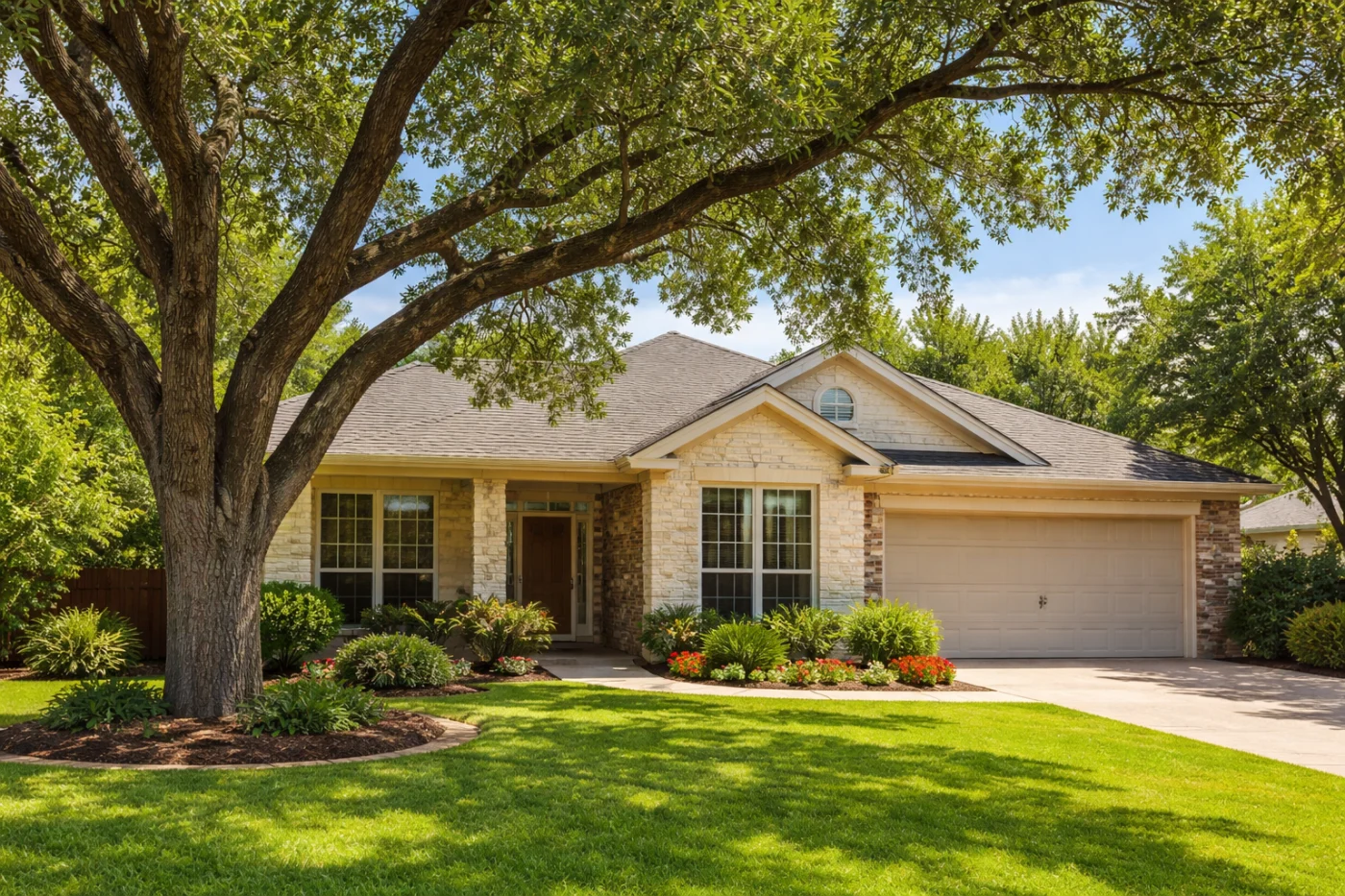
How Texas Freeze-Thaw Cycles Are Weakening Trees (and What That Means for Your Roof)
If you’ve lived in Central Texas the last few years, you’ve seen it.
We’ll get a hard freeze… then a few days later it’s back in the 80s like nothing ever happened. Then it drops again just as fast.
It’s weird weather. And it’s not just hard on people.
It’s rough on your trees too.
And when trees start getting stressed and weakened, your roof is usually the first thing that pays for it.
Here’s what’s going on.
What that back-and-forth weather does to trees
Trees are built for seasons. Slow changes. Gradual shifts.
They’re not built for this kind of whiplash.
When we get a hard freeze, the water inside the tree freezes and expands. Then a few days later it warms up and everything thaws back out.
That constant expanding and contracting puts a lot of stress on the inside of the tree. Over time, it can lead to cracking, splitting, and weakening of limbs.
A tree can look completely fine from the outside and still be compromised.
If you want to go a little deeper on how that works, Texas A&M Forest Service has a solid breakdown here:
https://tfsweb.tamu.edu/afterthestorm/
Why that becomes a roofing problem
A stressed tree doesn’t always fail right away.
Sometimes it’s weeks or even months later when the damage shows up.
All it takes is a windy day or a spring storm, and that limb that “looked fine” is suddenly on your roof.
And around here, we get plenty of wind and storms.
It doesn’t even have to be a huge branch either. Smaller limbs can scrape across shingles, wear them down, and create spots where water can get in later.
What to keep an eye on around your house
You don’t need to overthink this.
Just walk your property and look at the trees that hang over your roof.
If something looks off, it probably is.
Cracks in limbs, branches sagging lower than they used to, dead sections that showed up after a freeze… those are all signs the tree took some damage.
One simple rule that helps a lot: tree limbs should be at least 4 feet away from your roof.
Anything closer than that is going to make contact in a windstorm. Maybe not enough to notice right away, but over time it’ll scratch up shingles and shorten the life of your roof.
Staying ahead of it is pretty simple
Most of the time, this comes down to trimming back what’s hanging over your house and taking care of any limbs that look questionable.
It’s not complicated, but it’s one of those things people put off until something breaks.
If you’d rather have someone take a look at it, we recommend XXL Land Services. They know what they’re doing and can handle it safely before it turns into a bigger issue.
If a tree does hit your roof
It happens. Especially around here.
If it does, first thing is just make sure everyone’s safe. If there’s any real damage or things look unstable, get out and give it some space.
After that, call your insurance company and start the claim. Take pictures if you can.
If the roof is exposed, getting a temporary tarp on it can keep water from making things worse while you figure out next steps.
And even if it doesn’t look terrible, it’s still worth having someone check it out. Tree damage has a way of showing up later as a leak when you least expect it.
The bottom line
Those quick temperature swings we’ve been getting don’t just come and go.
They leave a mark on trees, even when you can’t see it right away.
And when those trees finally give, your roof is usually in the line of fire.
A quick walk around your place and a little trimming now can save you from a much bigger headache later.