

What Homeowners Should Know About Spanish Tile Roofs in Texas
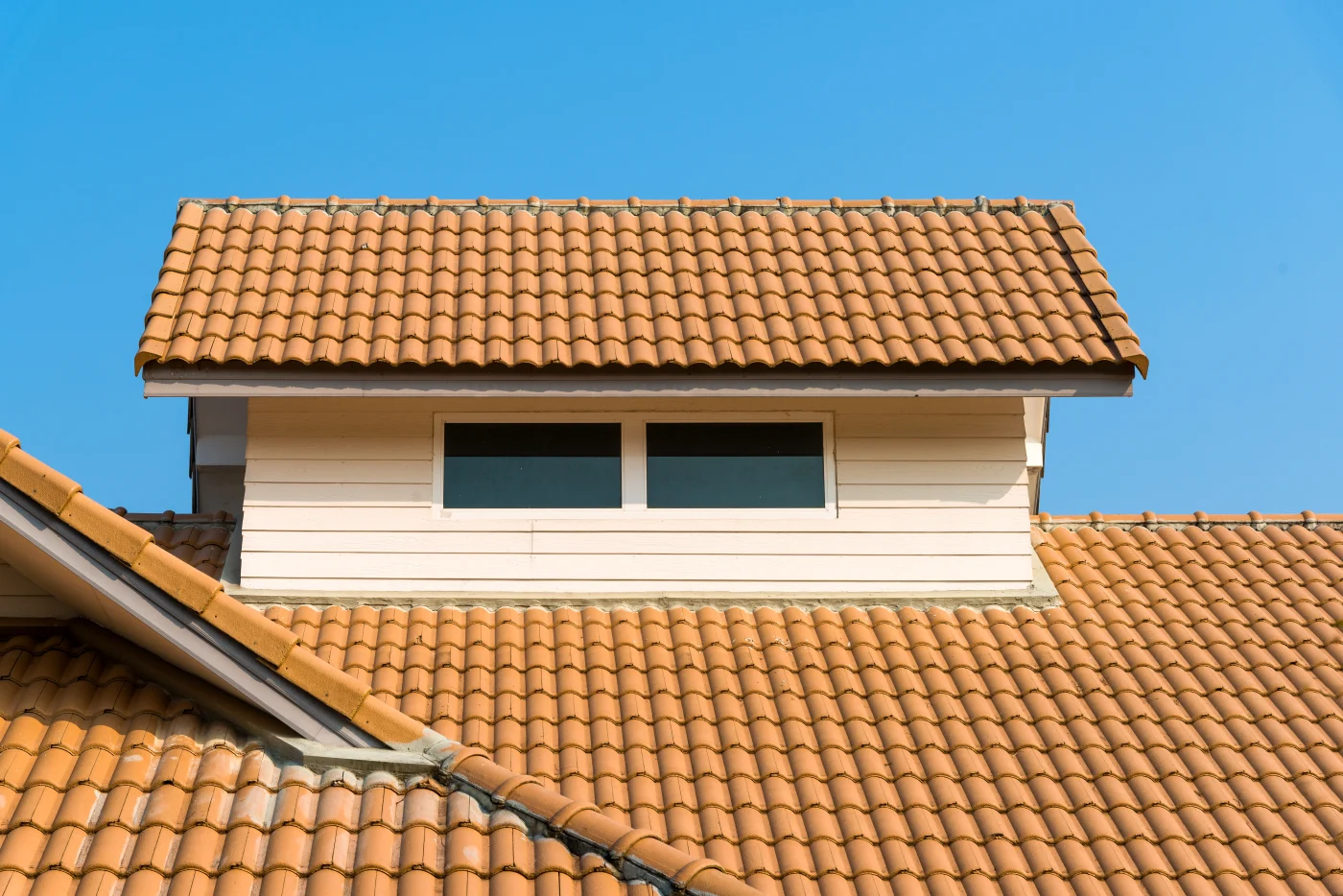
What Homeowners Should Know About Spanish Tile Roofs in Texas
Spanish tile roofs fit Texas well. The architecture makes sense here, the heat profile makes sense here, and when they’re installed correctly they age with a lot more character than most roofing systems. You see an older tile roof in the Hill Country with the right lines and patina on it and it still feels right on the house decades later.
At the same time, tile roofing is its own animal entirely. It behaves differently than shingles, gets assembled differently, sheds water differently, and carries loads into the structure differently. A lot of the problems that show up on tile roofs years later usually trace back to somebody treating it like a standard roofing system when it really isn’t one.
Clay and concrete are two very different materials
Most folks lump everything together under “Spanish tile,” but clay and concrete tile have different personalities once they’re sitting on a roof for twenty or thirty years.
Clay tile is the old-school version. It gets kiln-fired at extremely high temperatures, ends up relatively dense, and holds color exceptionally well because the color runs through the material itself. UV exposure doesn’t affect it much. Properly manufactured clay tile can sit in direct Texas sun for decades and still maintain a lot of its original appearance.
Concrete tile tends to be more affordable and structurally very durable, but it behaves differently with moisture. Concrete is naturally more porous. Over long periods, especially in climates with repeated freeze-thaw cycling, moisture absorption starts becoming part of the conversation. The surface coatings also weather differently than clay does. You’ll usually notice color fading and surface wear on older concrete systems before you see it on clay.
Neither one is automatically “better.” They just age differently and need to be understood differently.
The weight changes the engineering conversation immediately
Tile roofs put a serious dead load on a structure. Once you get into mortar-set systems or heavier concrete profiles, the weight climbs fast.
An architectural shingle roof may land somewhere around 300 pounds per square. Concrete tile systems can push north of 900 pounds per square pretty easily depending on profile and installation method.
That load transfers all the way through the roof framing into the walls and foundation. On newer homes designed around tile, that’s already accounted for. On retrofit projects, it becomes a structural question first and a roofing question second.
Around Central Texas, where movement in slab foundations already keeps engineers busy, adding a heavy roof system without understanding the load path is asking for trouble. Rafters, trusses, uplift resistance, lateral bracing, all of it matters.
Tile handles radiant heat extremely well
One of the reasons tile has survived so long in hot climates comes down to thermal behavior. The system naturally creates an air gap beneath the tile field, and that airspace changes the way heat transfers into the structure.
Instead of a continuous surface sitting directly against the decking like shingles, tile creates interrupted contact points. Air movement underneath the field helps dissipate heat before it transfers downward. Once ventilation gets incorporated properly at the attic level, the roof system starts behaving very differently during peak summer heat.
That doesn’t mean the attic suddenly becomes comfortable in August. This is still Texas. But the thermal load entering the structure tends to stabilize differently than it does under asphalt systems baking in direct sun all afternoon.
The underlayment is carrying the waterproofing load
This is probably the biggest misunderstanding homeowners have with tile roofs.
The tile itself is primarily a shedding surface. The actual waterproofing assembly sits underneath it.
Water gets beneath tile all the time. Wind-driven rain, capillary movement, overflow during heavy storms, all of that is expected in a tile assembly. The underlayment is what handles it.
That’s why underlayment selection matters so much. On high-end systems you’ll usually see multi-layer assemblies, premium synthetic products, self-adhered membranes in valleys, upgraded flashing packages, and carefully managed transitions around penetrations.
The interesting part is the lifespan mismatch. The tile itself may remain perfectly serviceable for fifty years or longer while the underlayment beneath it ages out much earlier. When underlayment replacement time comes, the tile often gets removed, staged, and reset back onto the roof.
That process only works smoothly if the original installation was done carefully enough to support future service work.
Freeze-thaw cycles have changed the conversation in Texas
Twenty years ago, freeze-thaw performance wasn’t nearly as prominent in Central Texas roofing discussions. The weather patterns the last several winters changed that pretty quickly.
Concrete tile especially can hold moisture in small surface voids and capillaries. Once temperatures crash hard enough, expansion begins inside the material itself. Repeated cycling starts creating stress fractures, edge deterioration, and occasional spalling.
Clay generally tolerates freeze-thaw conditions better because of the firing process and lower absorption rates, but profile design, manufacturing quality, and installation details still matter heavily.
You can usually tell which tile systems were installed thoughtfully after a major freeze event. Valleys stay clean, drainage paths stay open, fastening remains consistent, and the field stays stable without widespread cracking patterns developing.
Walking tile roofs takes some finesse
Tile roofing distributes environmental loads beautifully. Human foot traffic is another story.
Most broken tile doesn’t happen during storms. It happens from service traffic. HVAC work, satellite installs, gutter cleaning, holiday lights, all the little stuff that eventually puts somebody on the roof.
Experienced tile roofers know where the load-bearing points are within the profile and how to move across the roof without concentrating weight in vulnerable areas. Somebody unfamiliar with tile can crack a surprising amount of material in a short amount of time without even realizing they’re doing it.
Tile flashing work separates average crews from serious crews
This is where good tile roofs and bad tile roofs usually part ways.
Anybody can make a tile roof look attractive from the street for a few years. The flashing package tells you whether the system was actually built well.
Valleys, sidewalls, chimney transitions, penetrations, ridge details, bird stops, eave closures, all of those intersections determine how the system behaves long term.
Tile roofs move water differently than shingles. They create concentrated flow channels and larger void spaces beneath the field. Poor valley geometry or lazy flashing details eventually show up somewhere inside the structure.
And unfortunately, by the time interior staining appears, the actual failure point may have been active for quite a while already.
The bottom line
Spanish tile roofing is one of the best-looking and longest-lasting roofing systems you can put on a home in Texas when it’s designed and installed correctly. The systems breathe well in heat, handle UV exposure extremely well, and age with a lot of character.
They also demand a higher level of planning and craftsmanship than many other roofing systems. Structural loading, underlayment design, drainage management, flashing details, thermal movement, all of it matters.
A well-built tile roof feels quiet and solid. A poorly built one eventually starts having conversations with you through leaks, cracks, and movement.