

What Roofers Look for Before Winter Weather Hits the Hill Country
What Roofers Look for Before Winter Weather Hits the Hill Country
Everyone in Central Texas remembers Snowmageddon, January 2021. Roads were impassable. Power grids failed. Pipes burst. And for many homeowners, the roof quietly became part of the story in ways they did not expect.
While snow itself is rare here, the conditions that caused so much damage were not. Extended cold. Ice. Wind driven moisture. Repeated freeze and thaw cycles. Those are the kinds of winter events that test a roof system in the Hill Country. And they tend to reveal problems that have been developing for years.
Winter in Central Texas is not about preparing for heavy snow loads. It is about preparing for cold rain that lasts for days, ice that forms overnight, and temperatures that swing just enough to force materials to expand and contract over and over again. That movement is where small weaknesses become real problems.
When roofers prepare a home for winter, we are not looking for one dramatic failure. We are looking for patterns. Subtle signs. Places where water wants to go and what might stop it. The goal is not to predict the next storm, but to make sure the roof system is ready for whatever combination of cold, moisture, and wind Central Texas decides to deliver.
Here is what professional roofers look for before winter weather hits the Hill Country, and what you can check yourself today.
1. Shingle edges and seal lines
Start by walking the perimeter of your home and looking up at the edges of the shingles. You are looking for curling, lifting, or uneven edges. In warm weather, shingles rely on adhesive seal lines to stay bonded. As temperatures drop, those seal lines stiffen. If shingles were already compromised by wind or age, winter weather is when they finally let go.
Pay extra attention to north-facing slopes and areas that do not get much sun. These sections stay colder longer and are more prone to seal failure. A few loose shingles may not seem like a big deal, but once cold rain or ice gets underneath, water has a direct path to the underlayment and decking.
2. Flashing around penetrations
Most winter leaks do not come from the middle of the roof. They come from the interruptions. Vent pipes. Chimneys. Skylights. Anywhere the roof surface is broken.
Look closely at the metal flashing around these areas. You want it lying flat, sealed tight, and free from rust or gaps. In Central Texas, flashing failures are common because expansion and contraction happen year-round. Summer heat stretches materials. Winter cold shrinks them. Over time, sealant cracks or pulls away.
If you can see exposed nail heads, dried sealant, or separation between the flashing and the shingle, winter weather will almost certainly exploit it.
3. Gutters and downspouts
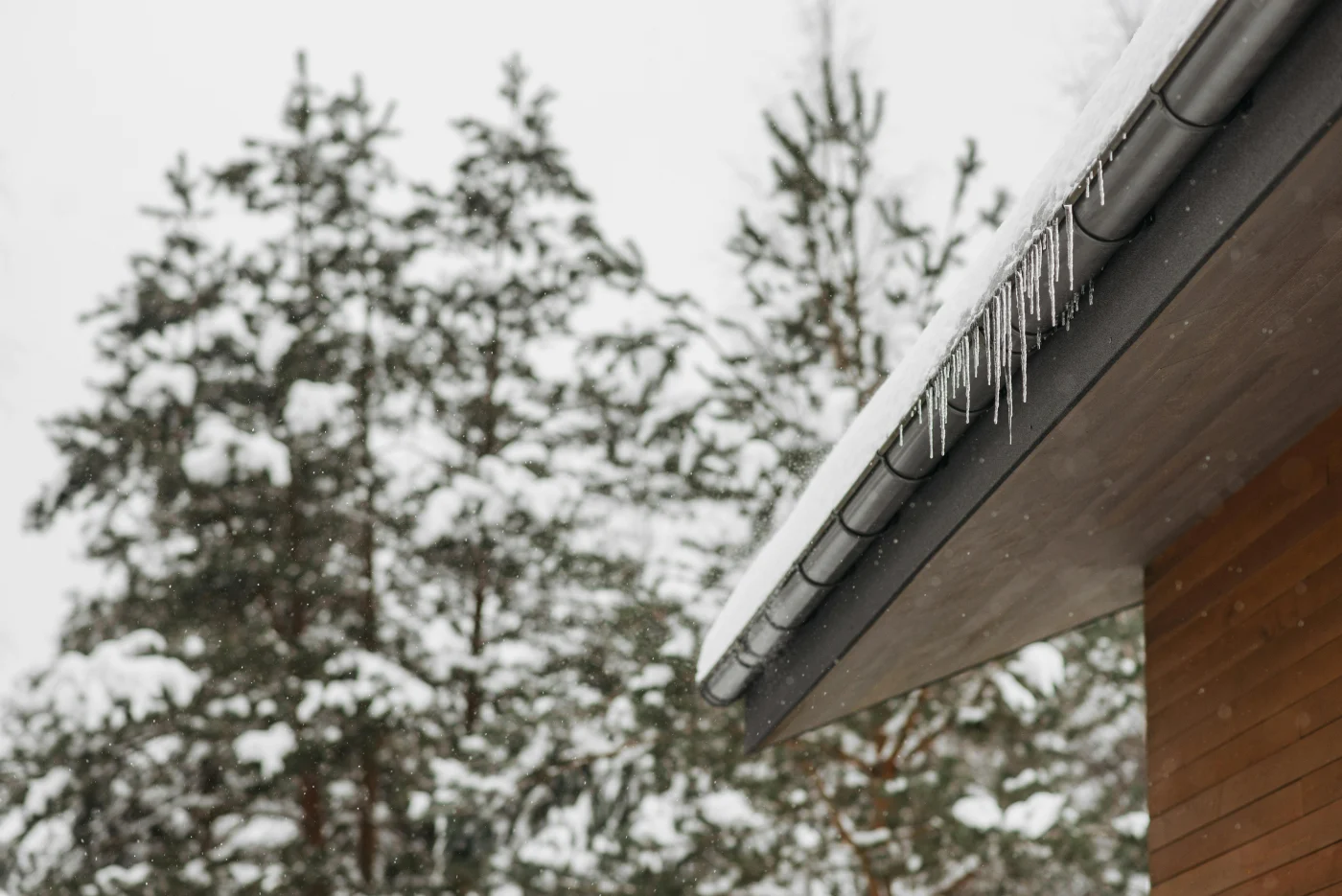
Clogged gutters are not just a spring problem. In winter, they become a much bigger issue. When water cannot drain properly, it backs up. If temperatures drop overnight, that standing water can freeze, expand, and force moisture under the edge of the roof.
Clear leaves, debris, and granules from gutters and make sure downspouts are directing water away from the foundation. You want water moving quickly off the roof and away from the house. Slow drainage is one of the most common contributors to winter-related roof leaks in this region.
4. Attic ventilation balance
This is where things get a little more technical, but it matters more than most homeowners realize. Your attic needs balanced ventilation. Intake at the eaves and exhaust at the ridge or roof vents. When that balance is off, moisture builds up inside the attic.
In winter, warm air from the house rises into the attic. If it cannot escape properly, it condenses on colder surfaces like roof decking and nails. Over time, that moisture leads to mold, rot, and premature roof failure.
Look for signs like rusted nail heads, damp insulation, or musty smells in the attic. These are indicators that ventilation is not doing its job. Fixing ventilation issues often prevents leaks that no amount of exterior patching will solve.
5. Valley areas
Roof valleys handle more water than almost any other part of the roof. Every slope above them funnels rain directly into those channels. In winter storms, that means a constant flow of cold water hitting the same area for hours.
Check valleys for debris buildup, lifted shingles, or exposed metal. Valleys should be clean and tightly sealed. Even minor imperfections can become major problems when water flow increases and temperatures fluctuate.
6. Interior ceiling and attic clues
Before winter arrives, take a look inside. Check ceilings for faint discoloration or soft spots. Look around attic access points and recessed lighting. Small stains often show up weeks or months before a full leak develops.
In many cases, winter weather does not create new problems. It exposes existing ones. If moisture has already found a weak path, colder conditions simply make it visible.
7. Overall roof age and system integrity
Finally, be honest about the age of your roof. Most asphalt shingle roofs in the Hill Country last between eighteen and twenty five years, depending on materials, installation quality, ventilation, and storm exposure.
If your roof is approaching the end of that range, winter weather is when multiple small issues tend to surface at once. Granule loss, brittle shingles, weakened seal lines, and flashing fatigue all compound under colder conditions.
A roof is not just a collection of parts. It is a system. When several components are aging together, inspections become far more important than spot repairs.
Why this matters
You can absolutely check these things yourself. In fact, you should. Knowing what to look for gives you control and confidence as a homeowner. But here is the honest truth. Most serious winter issues are not caused by one obvious failure. They come from a combination of small, technical details that interact in ways that are hard to see from the ground.
That is where a professional inspection adds value. At Freetail Roofing, we look at how the entire system works together. Shingles. Underlayment. Ventilation. Flashing. Drainage. Not just what failed, but why it failed and what that means for the next season.
Winter does not have to be dramatic to be damaging. In Central Texas, it is the quiet cold rain and overnight freezes that do the most work. Checking your roof now gives you a chance to address problems on your terms, not during the next storm.
And if you want a second set of trained eyes on it, we are always happy to help.